

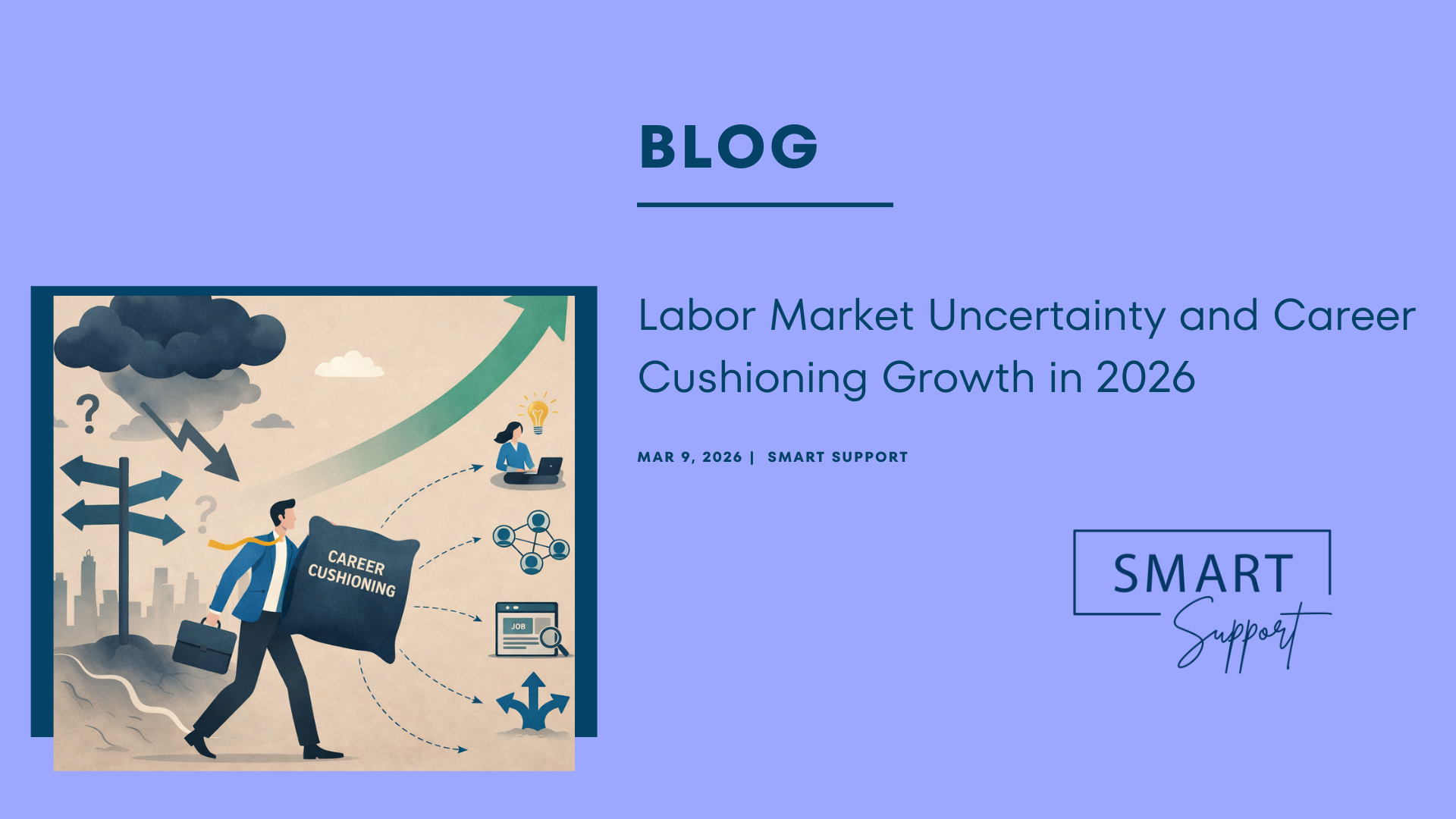
Labor Market Uncertainty and the Rise of Career Cushioning in 2026
In recent years, the labor market has become less and less like a stable and predictable system. Economic fluctuations, large-scale reorganizations in companies, and technological changes have created an environment where “stable employment” no longer means a long-term guarantee.
Against this background, employee behavior is also changing significantly. If earlier people mainly took career steps when a change occurred, for example, after job loss or dissatisfaction, today we increasingly see a proactive, preventive approach.
This behavior is called Career Cushioning in HR.
Career Cushioning means that a person, while still in the process of working, simultaneously begins to create alternatives for his or her career. This does not necessarily mean a desire to change jobs, it rather means a readiness that if the environment changes, he or she will already have a way out.
In practice, this can manifest itself in fairly simple actions — for example, a person updates their LinkedIn profile, makes new professional contacts, learns additional skills, or simply keeps an eye on the market for opportunities. In some cases, this takes a more active form — people begin to learn additional skills, engage in side projects, or create additional sources of income. The common goal of these behaviors is one — to reduce career risk and gain more control over their professional future.
Why has this behavior become so widespread
The rise of career cushioning is no coincidence — it directly reflects the reality of the job market today.
In recent years, large-scale layoffs, especially in the technology sector, have significantly changed employees’ perceptions of job security. According to Layoffs.fyi, more than 260,000 employees were laid off at technology companies in 2023 alone, which has become a signal to many that no position is absolutely secure.
Added to this is technological transformation, especially the development of artificial intelligence, which is changing not only work processes, but also some professions entirely. According to the World Economic Forum, a significant part of work skills will change in the coming years, forcing employees to constantly update their knowledge.
In these conditions, it becomes natural for people to think not only about the current job, but also about what may happen next.
What this means for organizations
Career Cushioning is not just an individual behavior — it directly affects organizations.
When an employee is constantly “ready for change,” his attitude towards work can change. Engagement is no longer as stable, and when a new opportunity arises, decisions are made more quickly.
This trend has also significantly changed the HR function. It is becoming increasingly important for organizations not only to attract employees, but also to retain them.
This involves creating an environment where employees see:
– Real opportunities for growth
– Career progression
– Some level of stability
Gartner research also indicates that organizations that actively work on employee development and career growth significantly reduce the risk of their departure. For example, according to Gartner, when employees feel that the organization supports their professional development:
– Their desire to stay increases by 19%
– Engagement increases by 61%
– The likelihood of achieving high results increases by 39%
At the same time, other studies show that employees in development-oriented organizations generally stay longer — for example, in companies with internal mobility, employees stay in the organization 60% longer
Career Cushioning and the New Career Logic
This trend has led to one significant change — careers are becoming less tied to a single organization and more about the skills of the individual.
Modern professionals increasingly think of themselves as a “portfolio of skills” that can be used in different settings.
This means that:
– Career development is becoming a continuous process
– Learning is no longer just formal education
– Professional identity is becoming more flexible
How is this reflected in the Georgian labor market
This trend is not yet fully established in the Georgian market, although its signs are already visible, especially among young professionals and in the technology sector.
It is increasingly common to find people who:
– Work on several projects in parallel
– Learn new skills independently
– Create additional sources of income
This indicates that the perception of career security is gradually changing — people are relying more on their own skills than on a specific job.
Summary
The uncertainty of the labor market is forcing not only organizations, but also individuals to change their behavior. Career Cushioning is a result of this shift — employees no longer wait for change, but prepare for it in advance.
This trend shows that career stability today depends more on an Adaptability, continuous development, and professional flexibility.
In these circumstances, the main challenge for organizations is to create an environment where employees not only work, but also see their future — otherwise, they will start looking for this future elsewhere.